
What did folks within the Stone Age eat earlier than the appearance of farming round 10,000 years in the past? A protracted-held stereotype — one which’s influenced fashionable fad diets — is that historic humans hunted giant animals and chowed down on mammoth steak.But new analysis on a Paleolithic group referred to as the Iberomaurusians, hunter-gatherers who buried their useless in Taforalt collapse what’s now Morocco between 13,000 and 15,000 years in the past, is including to a rising physique of proof that challenges the notion human ancestors predominantly relied on meat, in accordance with a research revealed Monday within the journal Nature Ecology & Evolution.Scientists analyzed chemical signatures preserved in bones and enamel belonging to at the least seven completely different Iberomaurusians and located that vegetation, not meat, have been their main supply of dietary protein. “Our evaluation confirmed that these hunter-gatherer teams, they included an essential quantity of plant matter, wild vegetation to their food plan, which modified our understanding of the food plan of pre-agricultural populations,” mentioned lead research writer Zineb Moubtahij, a doctoral scholar at Géosciences Environnement Toulouse, a analysis institute in France, and the Max Planck Institute for Evolutionary Anthropology in Leipzig, Germany.The share of plant sources as a supply of dietary protein within the humans whose stays have been studied was just like that seen in early farmers from the Levant, the present-day Eastern Mediterranean international locations the place plant domestication and farming have been first documented.Researchers additionally noticed a better variety of tooth cavities among the many Taforalt specimens than is often seen with hunter-gatherer stays of that interval. The proof instructed that the Iberomaurusians consumed “fermentable starchy vegetation” equivalent to wild cereals or acorns, in accordance with the research. The findings increase some intriguing questions on how agriculture unfold throughout completely different areas and populations.”While not all people primarily obtained their proteins from vegetation at Taforalt, it’s uncommon to doc such a excessive proportion of vegetation within the food plan of a pre-agricultural inhabitants,” mentioned coauthor Klervia Jaouen, a researcher at Géosciences Environnement Toulouse, in an electronic mail.”This is probably going the primary time such a big plant-based part in a Paleolithic food plan has been documented utilizing isotope methods,” Jaouen added.Deciphering historic dietsThe researchers used a way referred to as secure isotope evaluation to be taught in regards to the food plan of every of the Iberomaurusians studied.Nitrogen and zinc isotopes (variants of a component) contained in collagen and enamel enamel can reveal the quantity of meat historic diets as soon as contained, whereas carbon isotopes can shed mild on whether or not the principle supply of protein was meat or fish.”Humans devour these meals and the isotope data is recorded in tissues like bones and enamel,” Moubtahij mentioned. “By analyzing this tissues that we discover in archaeological information, we will know if an individual ate extra meat or they ate extra plant-based meals.”The isotope method reveals the quantity of vegetation eaten however not the sort. However, botanical stays of charred candy acorns, pistachio, pine nuts, wild oats and pulses found on the web site help the knowledge gleaned from the human stays. Grinding stones unearthed on the web site additionally counsel plant processing occurred close by.However, the Iberomaurusians weren’t strict vegetarians, the research famous. Cut marks on the stays of Barbary sheep and gazelles, in addition to historic horselike and cowlike mammals, instructed that some animals had been butchered and processed for meals.The elevated reliance on plant meals was in all probability pushed by a number of components — together with a wider vary of edible vegetation and maybe a depletion of huge sport species, in accordance with the research.Early weaning cluesThe isotope evaluation additionally detected proof of 1 case of early weaning, with starchy plant meals launched into an toddler’s food plan earlier than its demise at between 6 and 12 months previous.”This contrasts with hunter-gatherer societies the place prolonged breast-feeding intervals are the norm as a result of restricted availability of weaning meals,” in accordance with the research.The analysis solely investigated the diets amongst one group of Stone Age hunter-gatherers. However, the same research revealed in January — which analyzed the stays of 24 early humans from two burial websites in Peru courting from 9,000 to six,500 years in the past — revealed that historic diets within the Andes have been composed of 80% p.c plant matter and 20% meat.A November 2022 research revealed that Neanderthals and early Homo sapiens have been refined cooks, combining plant-based elements equivalent to wild nuts, peas, vetch, lentils and wild mustard.”I do not assume that there’s a customary food plan for everybody (on this interval), however it relies upon on the atmosphere. Humans are resilient and versatile of their food plan habits,” Moubtahij mentioned.The work undermines the concept a Stone Age food plan was meat heavy — a inflexible assumption perpetuated by present-day dietary tendencies just like the Paleo food plan. But the stereotype seemingly has its roots in previous analysis, and there are a couple of potential the reason why.Evidence for meat-eating, within the type of butchered animal bones, is usually extra “archaeologically seen” than the proof for plant consuming, mentioned Briana Pobiner, a analysis scientist and museum educator on the Human Origins Program within the division of anthropology on the Smithsonian National Museum of Natural History. She wasn’t concerned within the research.Another motive for the concept meat was central to early human diets is “the notion that looking was a key behavioral innovation that occurred early in our evolutionary historical past — rooted partly in early hunter-gatherer research carried out by male students that primarily centered on huge sport looking by males and didn’t doc, discounted, or downplayed the essential dietary position of girls gathering smaller sport and plant sources,” she mentioned through electronic mail.Agricultural transition revelationsJaouen mentioned that within the Levant area, archaeologists had documented the same plant-based food plan amongst one other group that practiced a hunting-and-gathering way of life simply earlier than the event of agriculture, elevating questions as to why the transition to farming didn’t concurrently happen among the many Iberomaurusian inhabitants.”These findings point out that a number of populations on the finish of the Paleolithic adopted a food plan comparable by way of plant content material to that of farmers,” she mentioned.The transition to agriculture was a fancy course of that occurred at completely different instances and proceeded at completely different charges, in numerous methods with completely different meals, somewhere else, Pobiner mentioned.”In different phrases, it was largely an area phenomenon that would contain transitional types of subsistence — not a single, sharp, simultaneous worldwide shift,” she added.
What did folks within the Stone Age eat earlier than the appearance of farming round 10,000 years in the past? A protracted-held stereotype — one which’s influenced fashionable fad diets — is that historic humans hunted giant animals and chowed down on mammoth steak.
But new analysis on a Paleolithic group referred to as the Iberomaurusians, hunter-gatherers who buried their useless in Taforalt collapse what’s now Morocco between 13,000 and 15,000 years in the past, is including to a rising physique of proof that challenges the notion human ancestors predominantly relied on meat, in accordance with a research revealed Monday within the journal Nature Ecology & Evolution.
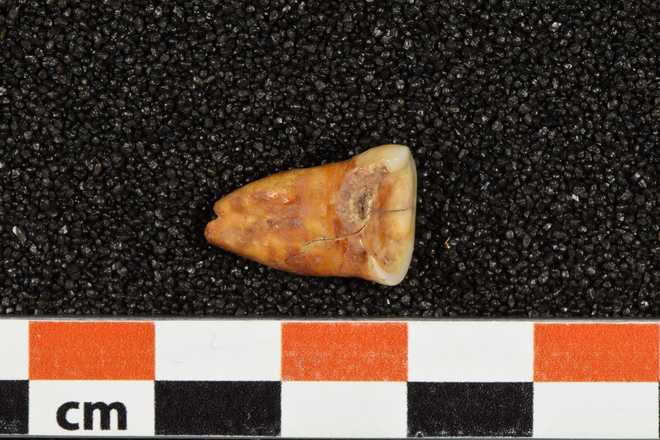
Scientists analyzed chemical signatures preserved in bones and enamel belonging to at the least seven completely different Iberomaurusians and located that vegetation, not meat, have been their main supply of dietary protein.
“Our evaluation confirmed that these hunter-gatherer teams, they included an essential quantity of plant matter, wild vegetation to their food plan, which modified our understanding of the food plan of pre-agricultural populations,” mentioned lead research writer Zineb Moubtahij, a doctoral scholar at Géosciences Environnement Toulouse, a analysis institute in France, and the Max Planck Institute for Evolutionary Anthropology in Leipzig, Germany.
The share of plant sources as a supply of dietary protein within the humans whose stays have been studied was just like that seen in early farmers from the Levant, the present-day Eastern Mediterranean international locations the place plant domestication and farming have been first documented.
Researchers additionally noticed a better variety of tooth cavities among the many Taforalt specimens than is often seen with hunter-gatherer stays of that interval. The proof instructed that the Iberomaurusians consumed “fermentable starchy vegetation” equivalent to wild cereals or acorns, in accordance with the research. The findings increase some intriguing questions on how agriculture unfold throughout completely different areas and populations.
“While not all people primarily obtained their proteins from vegetation at Taforalt, it’s uncommon to doc such a excessive proportion of vegetation within the food plan of a pre-agricultural inhabitants,” mentioned coauthor Klervia Jaouen, a researcher at Géosciences Environnement Toulouse, in an electronic mail.
“This is probably going the primary time such a big plant-based part in a Paleolithic food plan has been documented utilizing isotope methods,” Jaouen added.
Deciphering historic diets
The researchers used a way referred to as secure isotope evaluation to be taught in regards to the food plan of every of the Iberomaurusians studied.
Nitrogen and zinc isotopes (variants of a component) contained in collagen and enamel enamel can reveal the quantity of meat historic diets as soon as contained, whereas carbon isotopes can shed mild on whether or not the principle supply of protein was meat or fish.
“Humans devour these meals and the isotope data is recorded in tissues like bones and enamel,” Moubtahij mentioned. “By analyzing this tissues that we discover in archaeological information, we will know if an individual ate extra meat or they ate extra plant-based meals.”
The isotope method reveals the quantity of vegetation eaten however not the sort. However, botanical stays of charred candy acorns, pistachio, pine nuts, wild oats and pulses found on the web site help the knowledge gleaned from the human stays. Grinding stones unearthed on the web site additionally counsel plant processing occurred close by.
However, the Iberomaurusians weren’t strict vegetarians, the research famous. Cut marks on the stays of Barbary sheep and gazelles, in addition to historic horselike and cowlike mammals, instructed that some animals had been butchered and processed for meals.
The elevated reliance on plant meals was in all probability pushed by a number of components — together with a wider vary of edible vegetation and maybe a depletion of huge sport species, in accordance with the research.
Early weaning clues
The isotope evaluation additionally detected proof of 1 case of early weaning, with starchy plant meals launched into an toddler’s food plan earlier than its demise at between 6 and 12 months previous.
“This contrasts with hunter-gatherer societies the place prolonged breast-feeding intervals are the norm as a result of restricted availability of weaning meals,” in accordance with the research.
The analysis solely investigated the diets amongst one group of Stone Age hunter-gatherers. However, the same research revealed in January — which analyzed the stays of 24 early humans from two burial websites in Peru courting from 9,000 to six,500 years in the past — revealed that historic diets within the Andes have been composed of 80% p.c plant matter and 20% meat.
A November 2022 research revealed that Neanderthals and early Homo sapiens have been refined cooks, combining plant-based elements equivalent to wild nuts, peas, vetch, lentils and wild mustard.
“I do not assume that there’s a customary food plan for everybody (on this interval), however it relies upon on the atmosphere. Humans are resilient and versatile of their food plan habits,” Moubtahij mentioned.
The work undermines the concept a Stone Age food plan was meat heavy — a inflexible assumption perpetuated by present-day dietary tendencies just like the Paleo food plan. But the stereotype seemingly has its roots in previous analysis, and there are a couple of potential the reason why.
Evidence for meat-eating, within the type of butchered animal bones, is usually extra “archaeologically seen” than the proof for plant consuming, mentioned Briana Pobiner, a analysis scientist and museum educator on the Human Origins Program within the division of anthropology on the Smithsonian National Museum of Natural History. She wasn’t concerned within the research.
Another motive for the concept meat was central to early human diets is “the notion that looking was a key behavioral innovation that occurred early in our evolutionary historical past — rooted partly in early hunter-gatherer research carried out by male students that primarily centered on huge sport looking by males and didn’t doc, discounted, or downplayed the essential dietary position of girls gathering smaller sport and plant sources,” she mentioned through electronic mail.
Agricultural transition revelations
Jaouen mentioned that within the Levant area, archaeologists had documented the same plant-based food plan amongst one other group that practiced a hunting-and-gathering way of life simply earlier than the event of agriculture, elevating questions as to why the transition to farming didn’t concurrently happen among the many Iberomaurusian inhabitants.
“These findings point out that a number of populations on the finish of the Paleolithic adopted a food plan comparable by way of plant content material to that of farmers,” she mentioned.
The transition to agriculture was a fancy course of that occurred at completely different instances and proceeded at completely different charges, in numerous methods with completely different meals, somewhere else, Pobiner mentioned.
“In different phrases, it was largely an area phenomenon that would contain transitional types of subsistence — not a single, sharp, simultaneous worldwide shift,” she added.


