While baking and even making dinner, you would possibly come throughout recipes that require you scald milk. Which brings you to your subsequent query: how do you scald milk and why do you scald milk?
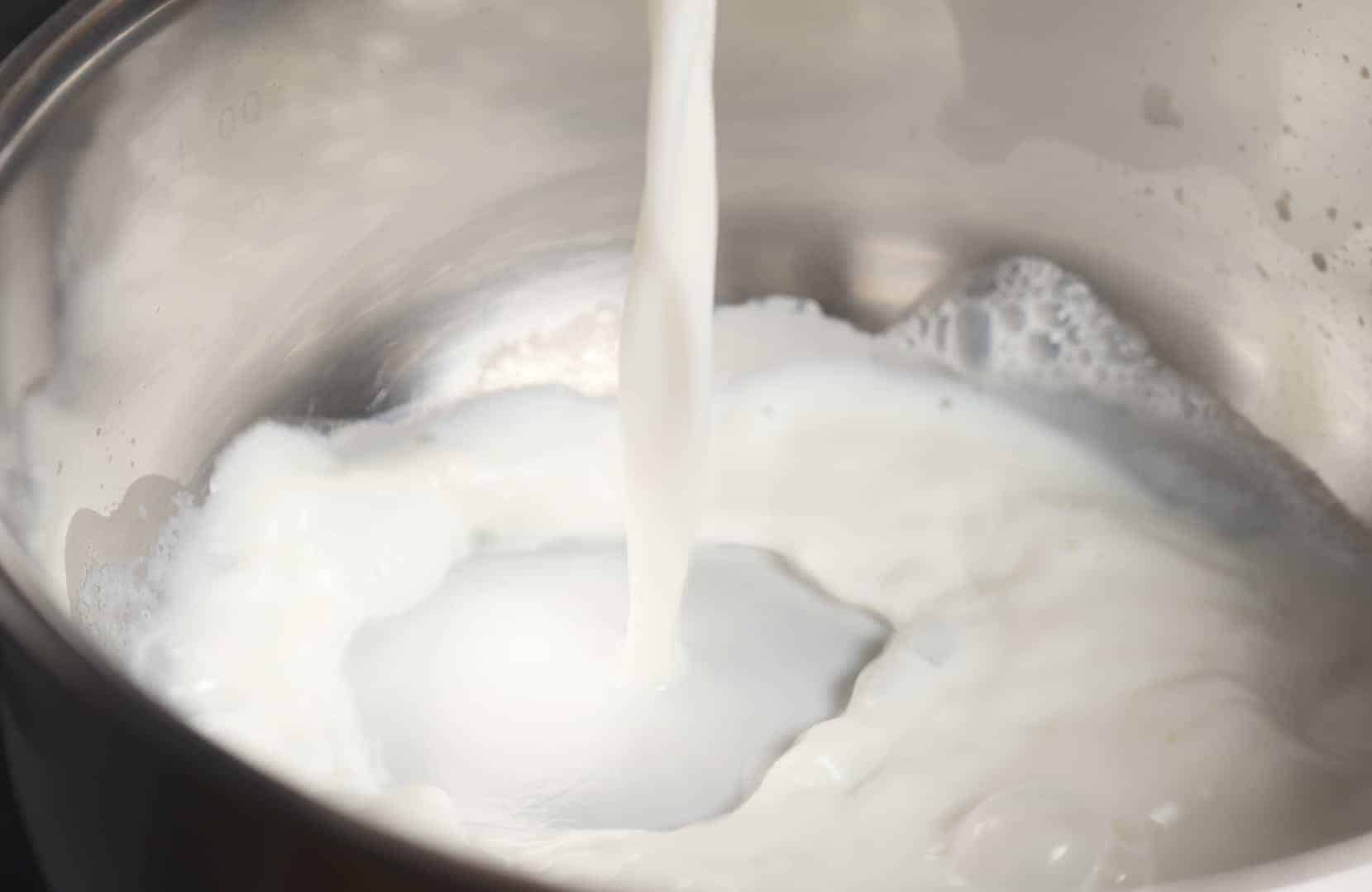
What is Scalded Milk?
In the previous days, the principal goal of scalding milk was to kill micro organism. However, right this moment (most) milk is pasteurized and due to this fact we solely scald milk for the secondary causes.
Scalded milk is milk heated to a close to boil, then cooled. It makes muffins, breads and something with yeast fluffier and and lighter.
The major purpose being that the whey protein in milk weakens gluten and prevents dough from rising correctly. Scalding milk kills the protein, permitting the gluten to keep intact. Heat chops up the molecules and peptides making the amino acids accessible for the yeast.
Making these amino acids extra available helps to dissolve sugar and let the yeast ferment (bloom), which may make your doughs rise higher, leading to fluffier and springier breads and muffins. You doesn’t desire a tremendous fluffy slice of cake?
Infuse Flavors
Milk, as a result of it’s so heavy in fat and protein, can be a nice medium for infused flavors. Infused milk can take an everyday recipe to spectacular. Here are a few of our favourite flavors.
- Cinnamon
- Vanilla beans or extract
- Citrus
- Fresh herbs
- Cranberries
- Star anise
- Clove
- Honey
- Nutmeg
- Juniper berries
Although not labeled “scalding,” we see this course of rather a lot in ice cream recipes. Think about simmering a vanilla bean in milk and permitting it to cool. It is identical course of.
Two Ways to Scald Milk
There are two methods to scald milk: on the stovetop and within the microwave. Although it is a bit more time consuming, I favor to scald milk on the stovetop.
How to Scald Milk on the Stovetop
This is essentially the most conventional technique and provides you essentially the most management as a result of you possibly can shortly take away it from the heating factor. It heats slower and extra evenly than microwaving.
- Pour the milk right into a heavy backside saucepan or double boiler. Slowly warmth milk over medium-low warmth.
- The key right here is to warmth the milk, however not to deliver it to a boil. If this makes you nervous, maintain checking the temperature utilizing a thermometer.
- Boiling will burn the milk and kill different very important proteins. Stir constantly to stop milk from thickening, burning or sticking to the underside of the pan. Bring to 180°F.
- While the milk is heating, monitor the temperature of the milk, but in addition stir the milk and stir often for even warmth distribution.
- Look for steam and small bubbles across the edges of the pan, then take away instantly from the warmth.
- Allow the scalded milk to cool to under 138°F earlier than including it to your recipe. If it’s too sizzling, it might kill the yeast or deliver all the components, particularly the butter, to an undesired temperature, impacting the completed the product.
Scalded milk is milk that has been heated to 180 °F. Do not warmth over 212°F.
How to Scald Milk within the Microwave
Scalding milk within the microwave offers you much less management over the temperature, however is faster. You can even want a microwave secure utensil of some kind to break the floor airplane and stop the milk from overheating and scorching. Many individuals use a wood or plastic chopstick, or one thing else related.
- Heat the milk in 30 second increments at 50% energy, stirring between every heating and monitoring the temperature.
- Follow the identical pointers as once you scald milk on a range high. Be cautious eradicating milk from microwave, because the bowl can even be tremendous sizzling.
Questions About How to Scald Milk
Yes! But keep in mind, it has much less fats. If the recipe requires complete milk or simply “milk” assume it means full fats. Less fats can affect the feel and taste, particularly in baked items.
If you’re like me and often solely have skim milk readily available, you possibly can substitute 1 cup of skim milk with 1 1/2 teaspoons melted butter for each 1 cup of complete milk.
No, almond milk isn’t dairy and doesn’t have the identical proteins as common milk so it’s not required.
You can use powdered milk for scalded milk. It is only a dehydrated model of liquid milk, so it has the identical proteins and chemical make-up.
Not actually, however you need to use un-scalded milk powder. If your recipe requires yeast, strive to make certain milk is not less than room temperature so it doesn’t inhibit activating the yeast.
Technically, no, however you will note the 2 phrases used interchangeably in recipes. Scorched milk is burnt milk and all the proteins have been heated up and out of the combination.
Yes! Any recipe that requires milk, particularly these with yeast, are perfect for scalded milk. If it doesn’t name for it from the get-go, be sure to make a bit further to account for evaporation. It will make the ultimate produce lighter and fluffier!
It could be after scalding, except the recipe explicitly requires the amount earlier than. Some water will evaporate so adda little extra in than the recipe requires to be sure to have sufficient and measure it once more after heating.
Nope! Scalded is milk is like the start phases of evaporated milk, but it surely lets about 50% of the water evaporate to a assume consistency.
Sweetened condensed milk is evaporated milk, however with added sugar so it’s thick, sticky and candy.
Can I believe it? If your recipe requires a thickened milk, use a small quantity of cornstarch slurry to thicken.
Recipes That Use Scalded Milk
Ready to check out your new approach. Here are a number of recipes that decision for scalded milk.
Scalded milk is milk heated to a close to boil, then cooled. It makes muffins, breads and something with yeast fluffier and and lighter.
Servings: cups
Pour the milk right into a heavy backside saucepan or double boiler.
Slowly warmth the milk over medium-low warmth. The key right here is to warmth the milk, however not to deliver it to a boil. Boiling will burn the milk and kill different very important proteins.
Stir constantly to stop it from thickening, burning or sticking to the underside of the pan.
Look for steam and small bubbles across the edges of the heavy backside sauce pan, then take away it instantly from the warmth.
Allow the scalded milk to cool earlier than including it to the supposed recipe. If it’s too sizzling, it might kill the yeast or deliver all the components, particularly butter, to an undesired temperature, impacting the completed the product.
Scalded milk is milk that has been heated to 82 °C (180 °F). Do not warmth over 212°F. You can use a sweet thermometer to monitor the temperature.
Remove from warmth and permit to cool or use whereas nonetheless sizzling. Consult your recipe for the perfect temperature to use it at.
If you might have tried this techinque, come again and tell us the way it went!
Calories: 198 kcal, Carbohydrates: 15 g, Protein: 10 g, Fat: 10 g, Saturated Fat: 6 g, Cholesterol: 32 mg, Sodium: 139 mg, Potassium: 429 mg, Sugar: 16 g, Vitamin A: 525 IU, Calcium: 368 mg, Iron: 0.1 mg
Check out much more articles on how to change into a greater residence prepare dinner!